
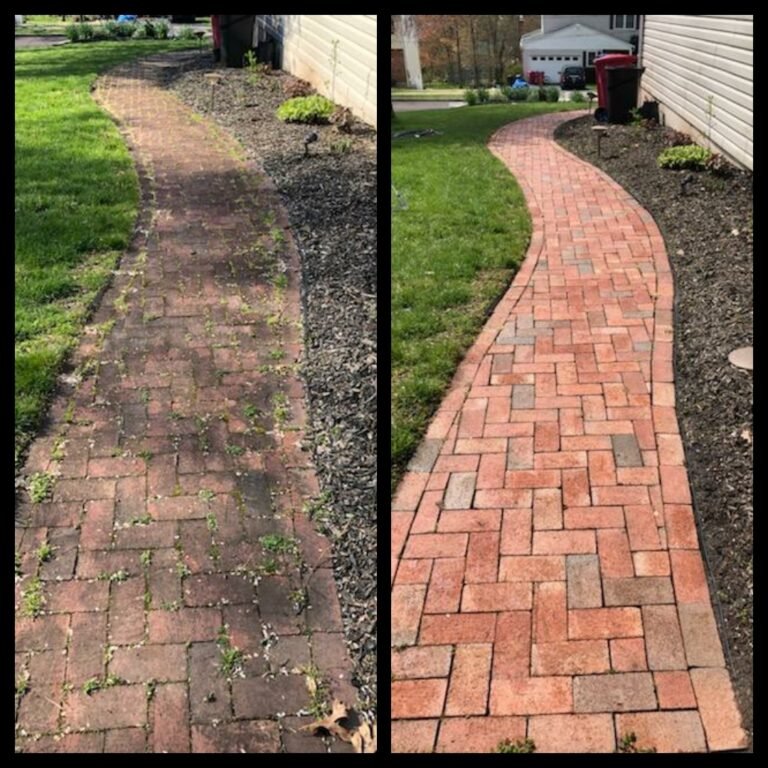
Brick is one of the toughest materials on a Long Island home. Front stoops, walkways, chimneys, garden walls and full brick fronts can last for generations. But brick has one weak spot that most people forget: the mortar between the bricks. In winter, that mortar takes a beating from road salt, ice melt, water and freezing nights. And the wrong kind of cleaning can do more damage than the dirt ever did.
In this guide we explain what you are seeing on your brick this time of year, what is safe to do now, what should wait for spring, and when it makes sense to call a professional.
What You Are Seeing on Your Brick This Time of Year
White powder or crust (efflorescence)
That chalky white haze on brick walls, steps and chimneys is called efflorescence. It happens when water soaks into the brick and mortar, picks up natural salts from inside the masonry, and then dries on the surface. The water leaves, the salt stays. Late fall and winter are prime time for it on Long Island because brick stays damp for days after rain and snow.
Efflorescence by itself is mostly a cosmetic problem. But it is also a message: water is moving through that brick. If it keeps coming back in the same spot, look above it. A clogged gutter, a leaking downspout or a cracked chimney cap is often the real cause.
Salt residue on stoops and walkways
Rock salt and ice melt look a lot like efflorescence, but they come from the outside. Every time you salt your front steps, some of it soaks into the brick and the mortar joints. Over a winter, the salt builds up, pulls in moisture and helps freeze-thaw cycles break down the surface. That is why brick stoops often look rough and sandy by spring.
Green or black film on shady walls
North-facing brick walls, garden walls under trees and brick near sprinklers often grow algae, mold and moss. It holds water against the brick all winter, which keeps the surface wet and cold for longer. It also makes steps slippery, which is a real safety issue in the dark months.
Dark soot and staining on chimneys
Fireplace season brings soot and smoke staining around the top of the chimney. Combined with rain runoff, it leaves dark streaks down the brick.
Why High Pressure Is the Wrong Tool for Brick
Many homeowners rent a pressure washer, turn it all the way up and aim it at their brick. It looks like it is working, because dirt comes off fast. The problem is what else comes off with it.
- Mortar joints wash out. Older mortar is softer than brick. A narrow, high-pressure stream can cut into the joints and leave gaps where water gets in.
- The brick face can erode. Many bricks have a harder outer skin. Blast it away and the softer inside absorbs much more water from then on.
- Water gets driven deep into the wall. Forcing water into the masonry right before a freeze is exactly how you get cracking, spalling and more efflorescence.
On brick we use low pressure, wide fan tips and the right cleaning solution for the stain, then a gentle rinse. The solution does the work, not the force. You can read more about our approach on our brick cleaning service page.
What Is Safe to Do Now, in Late Fall and Winter
1. Choose a dry, mild day
Brick can be cleaned in the cold months, but timing matters. We look for a dry stretch with daytime temperatures comfortably above freezing and no hard freeze expected that night. That gives the brick and mortar time to dry out before the temperature drops. Cleaning on a day that freezes overnight traps water in the joints.
2. Brush off loose efflorescence first, dry
Fresh efflorescence often comes off with a stiff nylon brush while the wall is dry. Never use a wire brush on brick, because steel can leave rust marks and scratches. If the white powder comes back after a few days, it is a sign water is still getting in, and cleaning alone will not fix it.
3. Use salt wisely on brick steps
You do not have to stop salting your stoop, but use only what you need, shovel first, and sweep up leftover salt once the ice is gone. Leftover salt sitting on the steps keeps soaking in. On older brick, ask your hardware store about ice melt products labeled as gentler on masonry.
4. Fix the water source before you clean
Clean gutters, make sure downspouts carry water away from brick walls and steps, and look at the chimney cap and flashing. Cleaning brick that keeps getting soaked is money spent twice.
5. Treat green growth on stairs and walkways
Slippery algae on brick steps and paths should not wait until spring. A gentle cleaning on a mild day removes the slime and makes the steps safer for the rest of winter. For brick walkways and patios, see our patio and walkway cleaning page.
What Should Wait Until Spring
Sealing brick
If you plan to seal your brick, wait for warmer, drier weather. Sealers need the brick fully dry and a run of mild days to cure. If you do seal, use a breathable masonry water repellent made for brick. Film-forming sealers can trap moisture inside the wall, and that trapped moisture can push off the brick face in a freeze. Plan the deep clean now, and the sealing in spring.
Repointing mortar
If you see gaps, crumbling or missing mortar after cleaning, that is a job for a mason, and mortar work also needs warmer weather to cure properly. Cleaning first actually helps here, because it shows you exactly where the joints are failing.
Brick Plus Siding: Clean the Whole House the Right Way
Many Long Island homes mix materials: a brick front with vinyl siding on the sides and back, brick steps with a concrete walkway, a brick chimney on a shingle roof. Each surface needs a different method. Vinyl siding gets a soft wash that kills mold and algae at low pressure. Brick gets low pressure and a masonry-safe solution. Concrete can handle more surface cleaning.
When we clean a home we match the method to the material, so nothing gets over-cleaned. If your home has mixed surfaces, our house soft washing and concrete cleaning pages explain how we treat each one.
Brick on Commercial Buildings
Brick storefronts, office buildings, apartment entrances and brick sidewalks in front of shops collect gum, grease, salt and grime fast, especially through the holiday season. We clean commercial brick early in the morning, at night or on weekends so we do not get in the way of customers or tenants. We are fully insured and can send a certificate of insurance (COI) to your property manager or building before we start. See our commercial pressure washing page for details.
Where We Work
We clean brick homes, stoops, walls and chimneys all across Long Island, from the older brick neighborhoods of Nassau County out through every town in Suffolk County, including the Hamptons.
Why Homeowners Call Us for Brick
- Low-pressure methods that protect the mortar and the brick face
- Eco-friendly cleaning solutions, chosen for each stain
- Certified technicians who know the difference between efflorescence, salt, mold and soot
- Fully insured, with a COI available for buildings and HOAs
- Open 7 days, with free quotes
- 100% satisfaction guarantee
Brick walkways and patios start from $99, and a full house soft wash starts from $149. Book online and save $20.
Get Your Brick Cleaned Before the Deep Freeze
If your stoop is white with salt, your chimney is streaked with soot, or your brick steps are green and slippery, now is a good time to take care of it, on the next dry, mild day. Call us at (516) 894-2994 or use the quote form on this page, and we will get back to you with a free quote.
📞 Call (516) 894-2994 Get a free quote